The Right Arrow For The Right Hunt
Published:
May 13th, 2026
By:
Eric Davis
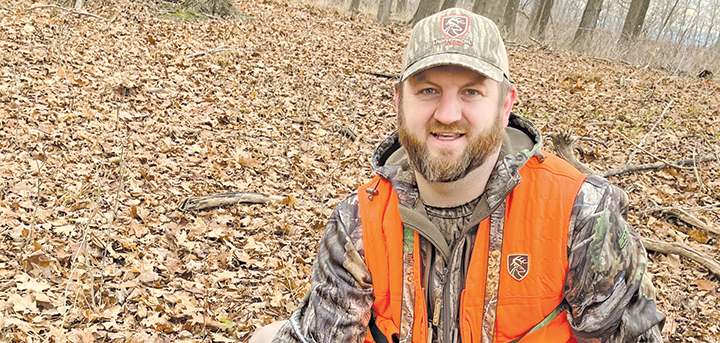 Outdoor Chenango Columnist Eric Davis
I would probably say that more than 90-percent of bowhunters today solely focus on arrow speed when choosing their bow, arrows, or both.
The “need for speed” was sought to avoid deer ducking the string and it still is a common reason given when discussing equipment among archers. When a deer hears a startling noise and wants to flee, they drop to “load up” before springing up to get out in a hurry. So, it is not necessarily that the deer know it is a bow, they just react to hearing a loud noise. So, one way to gain extra arrow speed is to go with a lighter arrow.
Deer have a dense coat of hair and thick hide to help them survive the harsh winters of New York. This becomes a heavy obstacle for a broadhead to get through before hitting the vitals of the deer. Speed alone might not be enough to ensure the broadhead gets through if the arrow is too light. This is where a heavier arrow or head can make a big difference.
The reason you may want to go heavier for your arrow or broadhead is to increase the momentum of the projectile. Momentum is the amount of force an item has moving forward. It is different from kinetic energy, which is the amount of energy a moving item has but does not take direction into account. A heavier item has more momentum because it is harder to slow down than a lighter item. Think of trying to stop a tractor trailer compared to a golf cart. So, a heavier arrow continues to penetrate the deer longer than a lighter arrow does after hitting the hair and hide of the deer.
The general recommendation for archers is to shoot an arrow that is 6 to 8 grains per pound of draw weight to achieve optimal momentum. This would mean a total arrow weight, which includes the tip, fletchings, and nock, of 360 to 480 grains for a 60-pound draw weight bow. Some people want to push momentum to the maximum and go with arrows that are over 10-grains-per-inch.
Some other ways to add weight to your arrow for added momentum include using larger fletchings, 4 fletchings, lighted nocks, or brass inserts instead of aluminum. The weight of the tip of the arrow can also be changed. The common weight is 100 grains but 125 and 150-grain options are available.
Momentum is also an important factor when considering what broadhead you are going to use. Expandable broadheads fly more like field tips but they use energy to open when they impact the deer. So lighter draw weights or arrows on the lighter end of the spectrum might not be suited for expandable broadhead use. Fixed blade broadheads can fly differently that field tips in bows that are not perfectly tuned but since they are “ready to go” upon impact with the deer they do not slow down the arrow as much as expandable broadheads. These are the go-to option for thick skinned game like elk or moose.
An additional bonus to shooting a heavier arrow is that the sound of the bow is quieter when shot. The potential energy stored in the bow when it is at full draw is distributed to the arrow and throughout the bow when it is shot. A lighter arrow absorbs less energy than a heavier leaving more energy to be dispersed to the bow, in the form of vibration or noise. So, while a light arrow might get to the deer quicker, a heavier arrow can keep the deer from hearing the bow and will provide more penetration thanks to its increased momentum. So when thinking about what arrow you want to use, make sure to think about what exactly you want to get out of the arrow and consider the best way to obtain those results.
Author: Eric Davis - More From This Author
Comments