Learn How One Bird Relies On Local Grasslands To Help It Fly Across World With The Chenango Bird Club
Published:
September 7th, 2026
By:
Kelli Miller
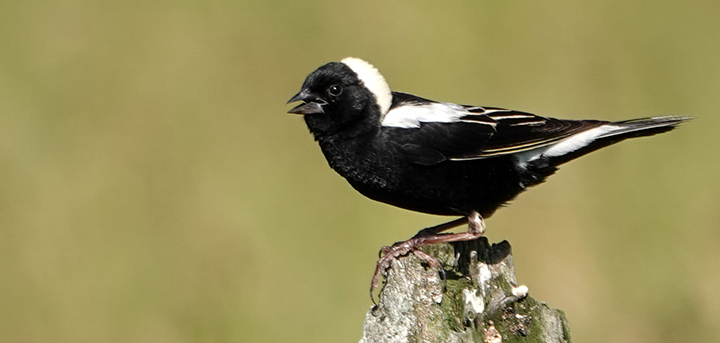 A male Bobolink. The Chenango Bird Club will host a meeting and presentation on Northeastern grasslands, starting at 6:30 p.m., Sept. 9, in the Rogers Environmental Education Center, located at 2721 State Rt. 80 in Sherburne. (Photo by Mike Dewispelaere)
SHERBURNE — The Chenango Bird Club will host a meeting and presentation on Northeastern grasslands starting at 6:30 p.m. Sept. 9 at the Rogers Environmental Education Center, located at 2721 state Route 80 in Sherburne.
The meeting and presentation will be open to the public, and new members are welcome.
Following a brief business meeting, Sam Quinn, a conservation biology instructor at SUNY ESF, will present “Northeastern grasslands: guidance on creating and maintaining open habitat for birds, insects and other biodiversity.”
Chenango Bird Club communications chair Dan Pfeifer said Quinn also serves as director of the Conservation on Private Lands Initiative.
“Through the program, researchers collaborate with private landowners to offer guidance on supporting biodiversity, enhancing conservation and improving landscape productivity and ecosystem function,” said Pfeifer.
Pfeifer noted that open-habitat management practices directly benefit species like the bobolink, which relies on grassy meadows and overgrown fields for ideal breeding grounds.
According to the All About Birds website, the male bobolink is a striking North American bird with a white back and black underparts, somewhat resembling a backward tuxedo.
The male has a rich straw-colored patch on his head and, at the end of summer, molts into a buff brownish plumage similar to the female.
Bobolinks travel about 12,500 miles to and from southern South America every year. Over its lifetime, a bobolink may travel the equivalent of four to five times around the circumference of the Earth.
Bobolinks visit grassy pastures and overgrown fields and may be seen in open yards to forage on seed-bearing weeds. Normally daylight foragers, they sometimes feed at night during migration.
The oldest bobolink on record was a female that was at least 9 years old.
Visit allaboutbirds.org to learn more about bobolinks and other birds.
Author: Kelli Miller - More From This Author
Comments