State Report Shows Surge In Planned Tax Cap Overrides As Chenango Maps 2027 Budget
Published:
August 27th, 2026
By:
Shawn Magrath
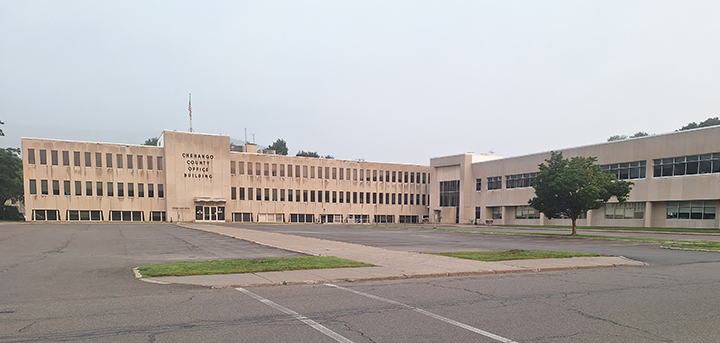 Enacted in 2011, New York State's tax cap limits local property tax levy growth to the lesser of 2% or inflation, excluding New York City, which is exempt. Municipalities can override the cap through local law. (Photo by Shawn Magrath)
ALBANY – A new report from the state comptroller suggests a surging number of New York municipalities are weighing property tax cap overrides for the coming fiscal year, a sign of intensifying financial strain on local budgets statewide.
The Office of the New York State Comptroller (OSC) reports a sharp rise in municipalities, fire districts, and a slight increase in school districts planning to override the cap, driven largely by local officials seeking revenue to balance budgets.
Enacted in 2011, New York State's tax cap limits local property tax levy growth to the lesser of 2% or inflation, excluding New York City, which is exempt. Municipalities can override the cap through local law, provided it receives the approval of at least 60% of the governing board before filing annual tax forms with the OSC.
According to the comptroller’s report, cities show the highest rate of planned tax cap overrides at 45%, followed by villages (35.5%), towns (28.6%), and counties (24.6%).
A sudden spike in planned tax cap overrides was last seen during the COVID-19 pandemic, when a shaky economy led to financial pressure for municipalities in 2021. Override plans gradually fell across all local governments as billions in federal aid arrived and inflation drove a surge in local sales tax revenues.
Planned overrides began rising again as federal relief aid tapered, inflation stayed above the 2% cap limit, and sales tax growth slowed down. Cities hit a record high in planned overrides for 2025 (49.2%), according to the OSC report. Counties saw a major jump in planned overrides for 2025, while town and village overrides rose more slowly.
“Planning to override the property tax cap is not necessarily an indicator of fiscal stress and, in fact, overriding may help local governments avoid the type of structural imbalance that leads to serious budgetary issues,” the OSC report states. “That said, the fact that many more entities are expressing an intent to override in recent years may be a sign that local officials are concerned about mounting fiscal pressures.”
The OSC report was released in the midst of the 2027 budgeting season for Chenango County officials. While Chenango County did not need to override the state's property tax cap for its 2026 budget, the Board of Supervisors braced for the possibility with a contingency resolution passed in July 2025.
Although lawmakers held a public hearing in August 2025 to consider exceeding the limit, Chenango County Treasurer Bill Craine said the override was not ultimately used.
The 2026, $121.4 million spending plan for Chenango County represents a 6.9 percent increase over appropriations in 2025 and stays under the state’s 3.74 percent tax cap for 2026.
The Board of Supervisors has not indicated plans for a cap override for the 2027 budget.
The Board of Supervisors has established six self-imposed financial precepts for budgeting. They include staying under the state-mandated tax cap (notwithstanding exigent circumstances), having a balanced budget using reasonable revenue and expenses, maintaining a NYS Comptroller’s rating of “not in fiscal stress," staying debt free, and maintaining a minimum of two months worth of operational expenses.
Author: Shawn Magrath - More From This Author
Comments