Village Of Sherburne Plans Upgrades To The Waste-Water Treatment Plant
Published:
April 24th, 2026
By:
Jessica Benson
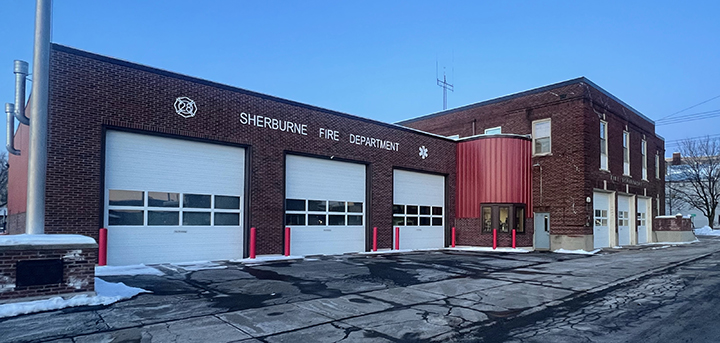 The Village of Sherburne is upgrading its waste-water treatment facility, built in 1971. (Photos by Jessica Benson)
SHERBURNE – The Village of Sherburne was among the first municipalities in the Chenango Valley to offer a waste-water treatment facility.
The system, built in 1971, has had some upgrades over the years, but the last one took place in 2000. After 55 years of operation, the system now needs to be replaced to meet new requirements.
The village has been working with Delaware Engineering to design a new system. Planning for the upgraded waste-water facility began in 2021. The current system is a trickling filter process system. “The trickling filter is a passive process. There’s not a lot of human involvement,” explained Village DPW and Electricity Supervisor Travis DuBois. “There aren’t a lot of levers to pull and buttons to push.”
Six years ago, the village had to begin adding poly aluminum chloride to help with phosphorus removal. “Sherburne is in the Chesapeake Bay Watershed. We have dead zones where algae growth prevents sunlight from getting in. We were asked to limit phosphorous.” New limits for phosphorous content went into effect in 2025. With the current system, it is difficult to meet those standards. “We are barely able to meet the limits set for 2025.” DuBois explained. As new guidelines and limits are established, maintaining those levels could prove even more difficult.
The new waste-water treatment plant is already in process. The New York State Department of Environmental Conservation received the village’s design in September of 2025. Since that time, the design has been under review. The design calls for a membrane bio-reactor. The system will involve an activated sludge process combined with a porous semi-permeable membrane. “The pores are small enough for the membrane to capture many viruses. It creates drinkable water,” DuBois said.
The new system comes with a budgeted cost of $35 million. Of that total, $31 million has been obtained in grant funding. Leaving just $3.5 million to be financed. The new system could increase costs for village residents. “While sewer rates are expected to increase, the Village’s ability to secure over 89 percent of the project cost in grant money will keep the burden on the rate payer as low as possible,” DuBois said.
The project is expected to be completed by the fourth quarter of 2027. The new system is being built parallel to the current system, so there will be no interruption of service.
“This is a necessary project. We haven’t had any upgrades to the system in 26 years,” DuBois said.
Author: Jessica Benson - More From This Author
Comments