New York State Government Needs Balance
Published:
October 12th, 2026
By:
Joe Angelino
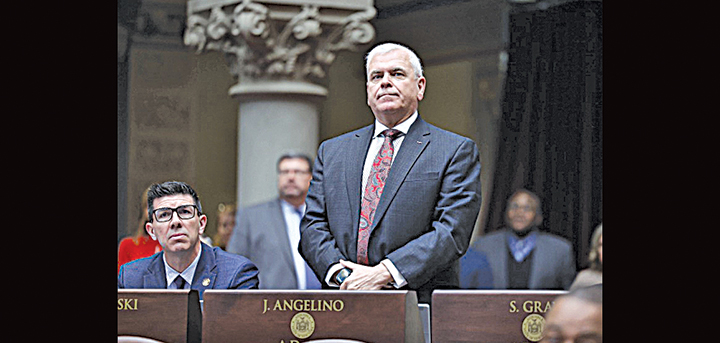
After six years serving in the New York State Legislature, I have gained a perspective that might be difficult to have from a person outside of Albany politics.
I've learned that New York State government is complicated. We have three branches of government that were deliberately designed to require checks and balances on each other. Branches with different responsibilities, constituencies and perspectives, supposed to be working together to serve the people. This is worth remembering as voters consider the future of New York State government. This isn't about political parties. It is about balance in government.
One of the biggest impacts on our state’s residents comes from the state’s budget. In New York, the executive branch, led by the Governor, develops and submits the budget. The legislature (63 senators and 150 Assembly members) reviews the proposed budget, offers changes and ultimately must pass the budget into law. This process requires the all-important negotiations between the two branches. The Judicial Branch is not involved at this point in the process.
From my seat in the Legislature, I've come to believe one-party rule has only been a race to see how much financial pain the taxpayer and businesses will endure before moving out of the state. One-party rule has caused extremely bloated budgets year after year. One must also remember, our budget is not only dollars, but routinely includes life changing policies and laws.
The last time New York government had balance was in 2018. In 2019, the Republican Party lost control of the State Senate, and the Democratic Party won the trifecta of power in Albany. Since that time, the New York State budget has increased $99 billion. That’s a 59% increase in spending in seven years. This while all local governments and school districts cannot exceed 2% annually for their budgets, without penalty. The New York State budget does not have a cap. And it shows.
This is why I believe having more than one political perspective involved in government would be healthy for our state. One Governor represents the entire state, and all the people within the borders. Legislators represent individual districts and communities. Those communities don't all have the same priorities. What matters to a family in New York City may be very different from what matters to a farmer in Delaware County. The challenges facing a small rural fire department aren't necessarily the same as those facing a large metropolitan department. Rural hospitals, small businesses, local governments and agricultural communities have concerns that can sometimes look very different from the concerns heard in Albany or New York City.
That's why I believe having more than one political perspective involved in government would be healthy. It forces people to talk. It forces people to explain their positions. And, perhaps most importantly, it forces people to negotiate, with give and take.
The argument that two different parties in government would lead to delays doesn’t hold water. This year’s state budget provides a good example. The past year of one-party in charge in Albany gave us an enormous $277 billion budget nearly three months later than the April 1st constitutional deadline.
State Comptroller Thomas DiNapoli specifically expressed concern that the budget process had gone far beyond the April 1 deadline and that this was becoming a new norm. So, we know that having the Governor and legislative majorities from the same political party doesn't guarantee an on-time budget. And it certainly didn’t show any restraint in spending and taxes.
I'm not suggesting that a different political arrangement would have produced a faster budget. There is no way to know that. But I do believe there is value in having someone at the table who doesn't automatically agree. Maybe there is value in having to sit down with people who have different ideas about taxes, spending, regulations, education, public safety, energy and the many other issues facing New Yorkers. That's not dysfunction, that's democracy the way it was designed to work.
As a legislator, I don't expect everyone to agree with me. In fact, I know they won't. But I do believe the best legislation comes from listening to different viewpoints and having to defend your position. And I believe voters should think about that when they vote this year.
We're accustomed to asking which candidate we agree with on the most issues. That's an important question. But there is another question worth asking when deciding your vote: Do you think New York is heading in the right direction?
Do we want all the major elected officials in state government to generally be working from the same political playbook? Or would there be value in having the Governor and Legislature bring different perspectives at the negotiating table?
Divided government can mean more disagreement. It can mean negotiations take longer. It can mean that some proposals don't pass. But it can also mean that proposals receive greater scrutiny. It can require compromise. And it can ensure that neither the executive branch nor the legislative branch simply assumes that its position will prevail.
Our system of government was built around checks and balances. As someone who has had the opportunity to see the legislative process from the inside, I have come to believe that a second voice at the table can be valuable, even if that voice sometimes makes the conversation more difficult. That's not a flaw in our system. That's the system working. It’s balance.
Assemblyman Angelino represents the 121st Assembly District, which includes parts of Broome County, Delaware County, Madison County, Chenango County and Otsego County. Follow Assemblyman Angelino on Facebook.
Author: Joe Angelino - More From This Author
Comments