County Budget Squeeze Collides With Economic Development As Bed Tax Shows Great Promise
Published:
October 2nd, 2026
By:
Tyler Murphy
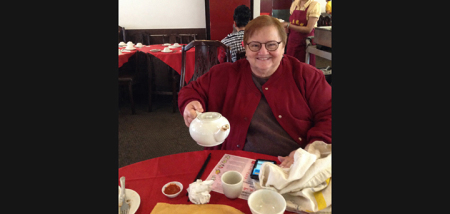
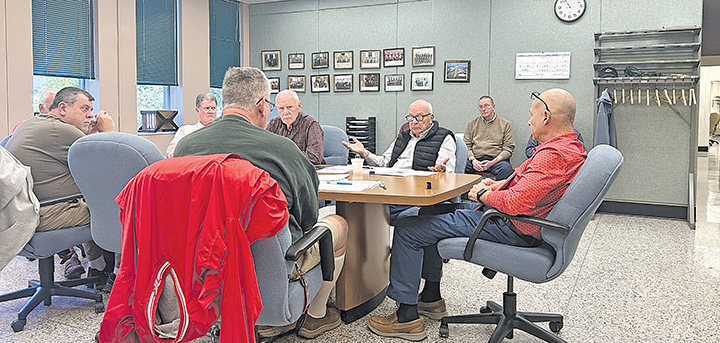 Commerce Chenango President and CEO Salvatore Testani, seated right in red shirt, addresses the Chenango County Finance Committee on Sept. 25, about the county's proposed changes on how the growing bed tax revenue should be spent. (Photo by Tyler Murphy)
NORWICH — Every time a visitor checks into a Chenango County hotel, motel, bed-and-breakfast or short-term rental, a 4% occupancy tax is added to the bill.
Five years ago, that money was a modest stream earmarked for local tourism promotion. Today it is one of the few county revenue sources that is growing and a debate has emerged between Commerce Chenango and Chenango County officials on how it should be spent going forward.
Leaders from the two sides presented their arguments at a finance committee meeting on Friday, Sept. 25, that ended in disagreement and officials voting to offer Commerce Chenango a minimum amount and leaving the larger question unresolved.
“I'm not telling you where to cut. I wouldn't do that,” Commerce Chenango President and CEO Salvatore Testani told the committee. “I'm telling you where I think you should invest.”
Commerce Chenango is the county's designated tourism promotion agency, which has received and reinvested the bed tax revenue since the tax began. However, as financial pressures have increased on county government as it tries to build a 2027 budget, the county finance committee wants to divert some funds to cover the cost of other programs and keep property taxes lower.
The increase in the bed tax has outperformed expectations and has been a great success say officials. Credit for that success in large part belongs to Commerce Chenango who has pushed for downtown development and economic revitalization, despite the many challenges. One of those crowning developments will include the opening of a new hotel in downtown Norwich in the year ahead, expanding the benefits the county is likely to see from future bed taxes even further.
Bed tax collections rose in last few years from about $33,000, to more than $70,000, then to about $99,000 in 2025. The county expects them to be more than $150,000 this year.
Visitor spending in Chenango County also rose 8.9% from 2023 to 2024, from $44 million to $48.4 million, the largest increase in its tourism region, according to figures released by Commerce Chenango. That spending generated about $2.8 million in local taxes.
Though Chenango County lags behind its neighboring counties in total amount collected from tourism, it is one of the fastest growing and ranked second in the region in 2025, with 8.4% growth in tourism-related spending, while the region as a whole grew about 2%.
County wants to plug budget shortfalls
The board of supervisors adopted the occupancy tax in 2020 to fund tourism promotion. Under the arrangement, Commerce Chenango has been guaranteed a minimum of $51,000 a year, the amount needed to qualify for a matching $51,000 grant in state tourism funds.
Previously any bed tax revenue beyond that has also gone to the agency, but it was only recently, when the amount has grown substantially to nearly $150,000, that it drew attention from officials who would rather cycle it into cover shortfalls in other places instead of re-investing it back into promoting possible economic growth.
Testani said the bed tax brought in about $22,000 in its early years and has now grown to an estimated $150,000 this year. He said the agency keeps about $10,000 for administrative costs and spends the rest on advertising, marketing and related tourism work. No other county tax dollars go into the tourism line, he said.
As the county works through its 2027 budget, county officials have proposed guaranteeing Commerce Chenango $150,000 of bed tax revenue up front, roughly triple its current minimum. Revenue above that amount would be directed by the county toward other uses that fall under the broader economic development definition.
Officials want to use the funds to plug shortfalls connected to SUNY Morrisville, Cornell Cooperative Extension, the Chenango County Council of the Arts, and park maintenance in Greene.
County officials claim they are avoiding cuts or having to raise property taxes.
“We are looking for ways to not increase the tax burden on our property taxpayers,” said Stanley Foulds Finance Committee Chairmen at the meeting.
Supervisor James J. McNeil also told Testani the proposal would give his agency more certainty, not less.
“It is guaranteeing you $150,000 of the bed tax money, up front, that you can start using, instead of waiting until the overage comes at some point in the future,” he said. Future revenue above the guarantee would go to the board to decide, he said, but “I would be really surprised if a major portion of that overage doesn't go to you.”
Commerce Chenango wants incentive to keep growing
Testani said the issue is not the size of the guarantee but the cap that comes with it. He suggested that instead of capping Commerce Chenango’s part the county should cap how much it takes from the bed tax to divert elsewhere instead, he suggested the county guarantee the $51,000 to meet grant requirements and then limit itself to never taking more than $100,000 from it and let Commerce Chenango keep the rest.
He told the committee that once tourism funding becomes a fixed budget line, it becomes difficult to increase, even as costs rise and the bed tax grows.
“Once you get an allocation of $150,000 for tourism, it'll be very hard to say, oh, we're going to make that $200,000 next year, $250,000 next year, because budget challenges are budget challenges,” he said.
Testani pointed out that the bed tax pays for itself. He said the agency's marketing has helped it grow, which in turn funds more marketing.
He pointed to Chenango County's 8.9% growth in visitor spending from 2023 to 2024, the highest in the region, and said surrounding counties spend far more on tourism promotion. Testani told the committee nearby counties collect and spend several times more a year from their bed tax programs than Chenango County does.
He also said Commerce Chenango had expected bed tax revenue beyond tourism to support its own economic development work, such as matching funds for grants and infrastructure projects. He said they did not expect it to cover existing county expenses.
The county's Planning and Economic Development Committee sided with Commerce Chenango, voting unanimously keep the bed tax arrangement the same, but officials have yet to decide its final outcome.
The Finance Committee voted to keep Commerce Chenango's tourism line at the $51,000 the agency originally submitted, the guaranteed minimum, and kick a final decision down the road.
Testani told the committee the outcome of the issue could put Commerce Chenango's role as tourism agency in question. He said the agency's boards are already weighing whether tourism work is drawing too much attention from housing, water and sewer projects and other economic development priorities.
Testani said he has offered alternatives, including allowing the county to fund its current list of programs from the bed tax for several years in exchange for leaving future growth with Commerce Chenango.
The decision may become larger after the new hotel opens, which officials on both sides expect to increase bed tax collections even further.
Author: Tyler Murphy - More From This Author
Comments