Chenango Residents Speak Out At DEC Gas Hearing
Published:
November 13th, 2009
By:
Melissa deCordova
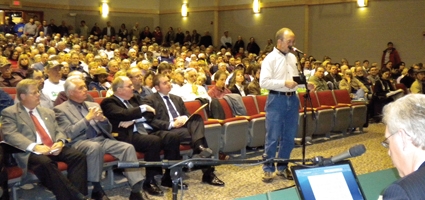
CHENANGO BRIDGE – A Smithville Center woman wore a toxic waste drum and handed out fake one thousand dollar bills. A woman from Marathon helped hold up a sign accusing New York state regulators of being the puppets of big industry.
And the words “the poor farmers need the money” could be heard often upon entering Chenango Valley High School Thursday night for the second in a series of public hearings on proposed environmental regulations for permitting natural gas drilling into the nation’s largest gas reserve, the Marcellus Shale.
The first, held in New York City earlier this week, attracted similar protests, with one individual storming the stage yelling and, afterward, being escorted out.
But the more than 1,000-member audience that packed the school’s auditorium to the brim were predominantly pro-drilling and asked the Department of Environmental Conservation to lift the ban so natural gas companies could begin their work immediately. More public officials and leaders of land coalitions (who were often one and the same) than environmental activists took the microphone during an orderly, controlled comment period.
“I’m surprised,” said Chenango County Farm Bureau President Bradd Vickers observing the crowd. “I thought there would be more protest.”
Author: Melissa deCordova - More From This Author
Comments