Chronological diversity

Tear it down and rebuild something else? Or repair what is already there? These seem to be the two major choices confronting urban planning.

As a historian, I prefer keeping what already exists, because it contributes to a chronological diversity, an array of buildings of diverse ages. Buildings constructed in different time periods reflect the architecture of those periods. The end result is much more interesting than a large swath of buildings all the same age.

But then, I am fascinated by diversity no matter where it is, whether in urban, suburban, or rural settings. Most people are not. In fact, they are hostile to the notion of mixing the old with the new. Some folks are slaves to fashion. They remodel just to update, as if being behind the times was a grievous sin.


Those of us who appreciate the old-fashioned are not against the newfangled. We love the diversity so we want to mix them into an eclectic hodgepodge. In this sense, everything goes together with everything else. Seeing a building two centuries old next to one recently built glorifies history.

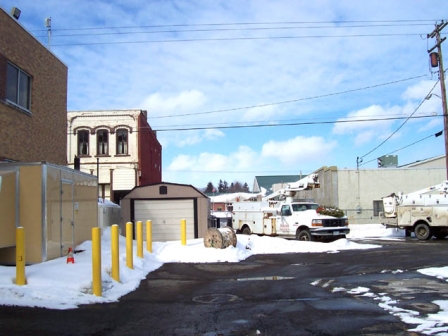
In the photo is just such an example. Buildings from three different centuries are visible. The photo was shot from the right angle turn in East Park Place in the City of Norwich. On the left is the C&U (Chenango & Unadilla Telephone Company) (now Frontier) building, constructed in 1965. Behind it to its right is a creamy white-faced red building, erected some time between 1863 and 1872. In the background is the green metallic roof of the Norwich YMCA, built in 2002.

Discuss this story with other members on the Forum


There's more to this story! You're only seeing 45% of the story. Subscribe now to get immediate access to the rest of the story as well as our whole online offering.

Today's Other Stories


Reader Response

Be the first to comment on this story.

Please log in to leave a comment.
© 2008 Snyder Communications/The Evening Sun
29 Lackawanna Avenue, Norwich, NY 13815 - (607) 334-3276