Over the past decade, school safety has become an unprecedented nation-wide issue following numerous instances of shocking classmate and intruder-led attacks on students, teachers and administrators.
According to data provided by the National School Safety Center, there have been 410 deaths in America related to school violence since 1992, with 324 of them from shootings. School gunmen started to gain national infamy in the late 1990’s, beginning in 1997 with a calculated onslaught in Pearl, Miss., carried out by several disturbed teenagers who left two students and one of the killer’s mothers dead. The violence in Pearl was followed by a rash of other high profile school massacres, including shootings in West Paducah, Ky., Jonesboro, Ark., and the horrific attack in 1999 at Columbine High School in Littleton, Colo., where two students killed 13 of their classmates and teachers, and then turned the guns on themselves.
“Kids have found more lethal ways to settle arguments,” said Dr. Ted Feinberg, an expert with the National Association of School Psychologists. “In years past they were maybe settled with a bloody nose or bloody elbow on the playground.” In a phone interview with The Evening Sun, Feinberg said bullying, alienation and a general feeling of disconnection to society has allowed some students to rationalize committing horrific acts of violence that were unthinkable before. “Certainly we know drug issues, parenting issues, a lack of education, and a lack of cohesive community relationships can be contributing factors,” he said.
Earlier this year, hostage situations perpetrated by middle-aged gunmen at Platt Canyon High School in Bailey, Colo., and an Amish School in Quarryville, Pa., which in separate incidents left several female students dead, have now brought school safety from outside forces into question.
The Experiment
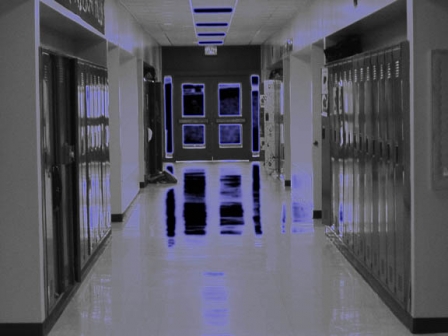
On Monday morning of last week, in light of the recent violence, five Evening Sun reporters tested the outside and inside security at nine schools in seven local districts by attempting to enter the buildings through unlocked doors – and then finding out how long they could travel the halls without being recognized and stopped as strangers. Coincidentally, the tests occurred the day before a walk-through security assessment at Sherburne-Earlville High School was to be conducted, and on the same day as an incident at Norwich Middle School where a student reportedly intending to injure others with a knife was stopped and detained prior to causing any harm.
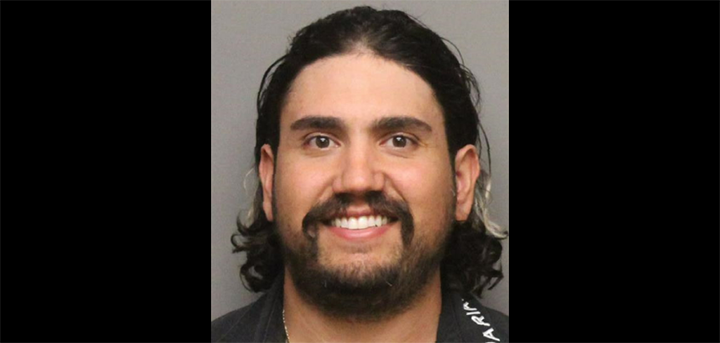
Dressed in casual to somewhat questionable clothing (see photos on Page 2), and searching out any open doors, reporters gained limited entry into Unadilla Valley Central School and Greene Central School before being questioned, and were stopped upon entry at Norwich Middle and High Schools, Oxford Elementary and High Schools and Gilbertsville-Mt. Upton High School. However, at Sherburne-Earlville Middle and High School, Otselic Valley Middle and High School, and Perry Browne Elementary School, reporters were able to gain access and walk freely throughout the building for between five and ten minutes before they were acknowledged by either a staff member or student.
“It’s not something I take lightly,” said Sherburne-Earlville School Superintendent Gayle Hellert, in response to the mock intrusion. “We talk about safety a lot. We talk about being vigilant and not getting complacent, and knowing that it can happen anywhere.”
Hellert and S-E High School Principal Keith Reed explained that the point of entry breached by the reporter is open as a handicapped accessible door, and has been a concern since it was created three years ago. They said plans are currently in place with a safety committee and an independent expert from BOCES to see how the door can be secured, yet still remain convenient for the disabled.
When asked if there was an explanation for several faculty members ignoring the reporter for roughly 10 minutes, the administrators said he may have been confused for a student based on his appearance, although they, and almost every other school official agreed: there are not any profiles that can help staff or students discern the intentions of a stranger or visitor.

There's more to this story! You're only seeing 43% of the story.
powered by