Souvenirs Of Yesteryear: Chenango Forks
Published:
September 25th, 2006
By:
Donald A. Windsor
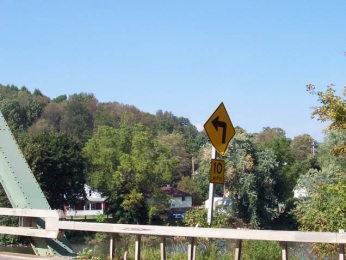
That picturesque little hamlet down on State Route 12 just over the Broome-Chenango border is Chenango Forks. It is so named because it lies on the confluence (the fork) of the Chenango and Tioughnioga rivers. Mercifully, it is not called Tioughnioga Forks. A few decades ago a tavern there was called the “Last Chance.” I often wondered, last chance for what?
Historically, the confluence was an important switching point for the Indians. They took the Tioughnioga to go to Onondaga and the Chenango to go to Oneida (Souvenirs January 16, 2006). The confluence was the apex of the famous Chenango Triangle, whose northern base was a line between the Tioughnioga River on the west and the Chenango River on the east. The current towns, or parts thereof, of Smithville, Greene, and Oxford were once in the Triangle. The Broome towns of Lisle, Barker, and the aptly named Triangle were also. In 1798, the Triangle was originally split into two parts by a straight line between the practical midpoint of the base and the confluence. This midpoint was the southeastern corner of what was the Military Tract and then became Onondaga County. The western part stayed in what was then Tioga County and the eastern part went to the newly formed Chenango County. This Triangle is one reason why the southern towns of Chenango County are shaped so differently from the northern towns, which were originally the neat, boxy Twenty Towns.
Author: Donald A. Windsor - More From This Author
Comments