Souvenirs Of Yesteryear: Octagonal Silos
Published:
August 1st, 2006
By:
Donald A. Windsor
By Donald A. Windsor
Deputy Historian, Chenango County
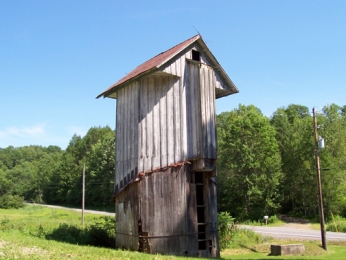
When Dan Noble showed me the stone foundation of an octagonal silo (Souvenirs July 12), my first reaction was to find an intact one still standing. Fortunately, Dan told me where to find one.
There it is in the photo. It is located on the north side of County Road 21, just east of the intersection with Cole Road, in the southeast corner of the Town of Smyrna. This weather-beaten wood structure is as sturdy as it is stately. The owner once tried to pull it down with a tractor but could not. I am glad. I implored him to conserve it, because it is so rare. I suggested he sell it, so if a potential buyer is interested, let me know.
The top portion is constructed with a board and batten pattern, a style from the early 1900s. The bottom is simply planks. That diagonal line separating the top from the bottom is metal flashing left from the barn roof. Apparently, the top was outside and the bottom was inside the barn, which has since been razed. The silo is about 30 feet tall and 16 feet across. Its double walls are separated by 8-inch horizontal boards. I could not inspect it very closely because a hyperactive swarm of busy bees resented trespass. The peaked roof is square and the original wood shingles are partially covered with rusted metal. The chute encloses a ladder up to that window on top.
Author: Donald A. Windsor - More From This Author
Comments