Farm Bureau Members Consider Possibilities Of Bio-diesel
Published:
July 29th, 2010
By:
Melissa Stagnaro
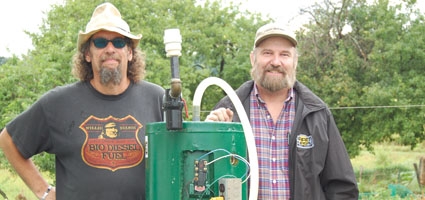
CHENANGO COUNTY – Plymouth resident Giff Foster says producing bio-diesel is as “easy as making chocolate milk.” And he should know. The Connecticut-transplant, who currently calls a 76-acre hay farm in rural Chenango County home, has been recycling waste vegetable oil into the alternative fuel for the better part of six years.
“It’s the energy of tomorrow, available today,” Foster told a group of Farm Bureau members from Chenango and surrounding counties last week. His home-based production facility was one of the stops the group made during an event planned by the Chenango County Farm Bureau. Foster is on the organization’s board of directors and serves as energy chair.
The tour began at the CCFB office in Norwich, where the organization’s president, Bradd Vickers, was the first to address the crowd. A vocal supporter of alternative energy, he is an advocate of the 25 x ‘25 initiative, the goal of which is for 25 percent of the United States’ energy to be produced by American agriculture by 2025. And according to Vickers, bio-diesel fits the bill.
“We’re talking a renewable resource here that disconnects us from our dependence on foreign oil,” he explained.
Using a display which won the CCFB its 12th national award from the American Farm Bureau – the local group has the distinction of being the most recognized county level organization in the federation – Vickers described his vision for local bio-diesel production.
Author: Melissa Stagnaro - More From This Author
Comments