NYRI Hearing: Hot Night, Hot Issue
Published:
July 18th, 2006
By:
Michael McGuire
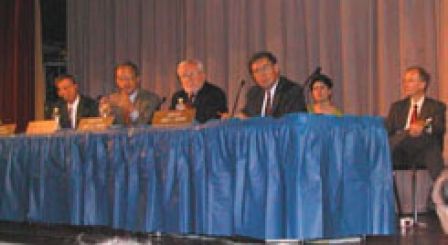
NEW HARTFORD – “It’s a hot night to deal with a hot issue,” said Senator James Seward (R- Milford), in his opening statement during Monday night’s legislative hearing regarding New York Regional Interconnect Inc., at New Hartford High School.
However, aside from a few rounds of rousing laughter and regular bursts of applause from the crowd of roughly 250 people, the atmosphere in the air-conditioned auditorium remained fairly cool.
Senators Seward, Raymond Meier (R-Western), James Wright (R-Watertown), and David Valesky (D-Oneida), along with invited local speakers, mainly focused on the necessity of examining both energy project and policy alternatives.
“We have to ask why downstate can’t solve its own energy problems,” said Senator Meier. “If they’re taking cheap upstate energy to an expensive market, there is no incentive for them to build generation capabilities.”
Seward asked representatives of the New York State Public Service Commission who were on-hand if neglecting to include environmental, energy conservation, and new generation alternatives in an Article VII application was a “fatal flaw.”
“It could be,” said PSC representative Paul Agresta. “You’re leaving yourself open for a denial if you leave out that information.”
When Seward asked NYRI representatives if the company had supplied any such alternatives, Attorney Leonard Singer replied, “They have not.”
The panel heard testimony from four local representatives who shed some new light on the possible outcomes specific to communities and businesses along NYRI’s power line.
Author: Michael McGuire - More From This Author
Comments